
Honorable Mention
Antofagasta Coastal Edge Metropolitan Park
Borde Costero de Antofagasta · 2017 · Urban Design · Project
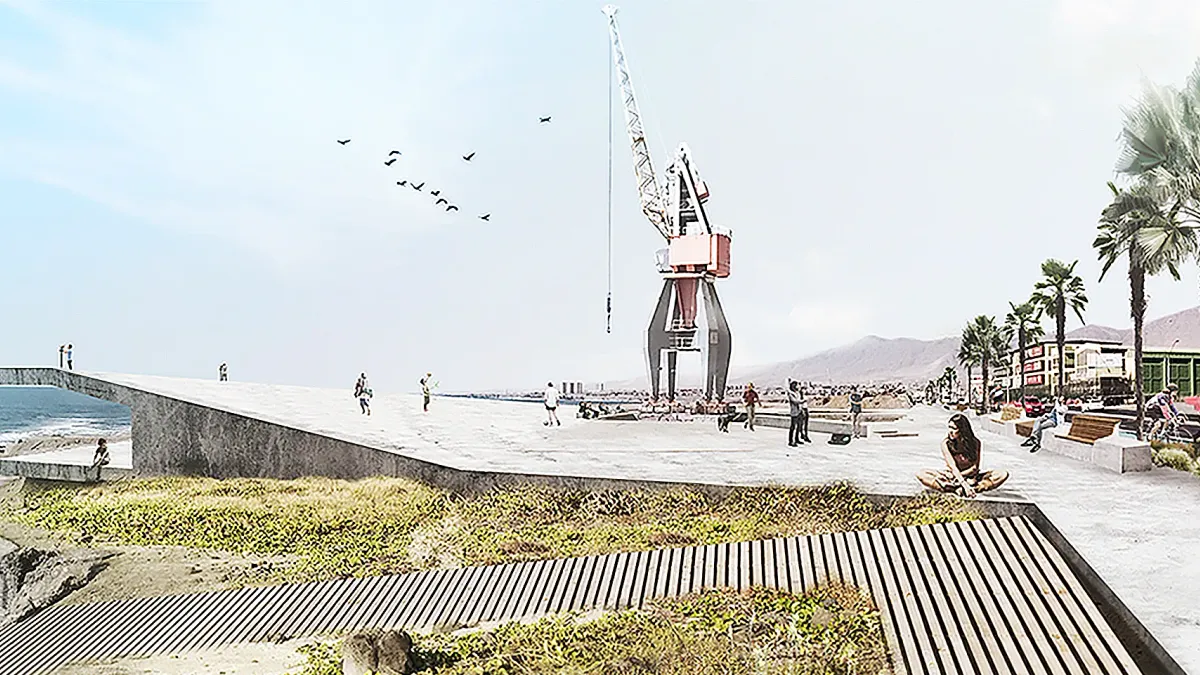
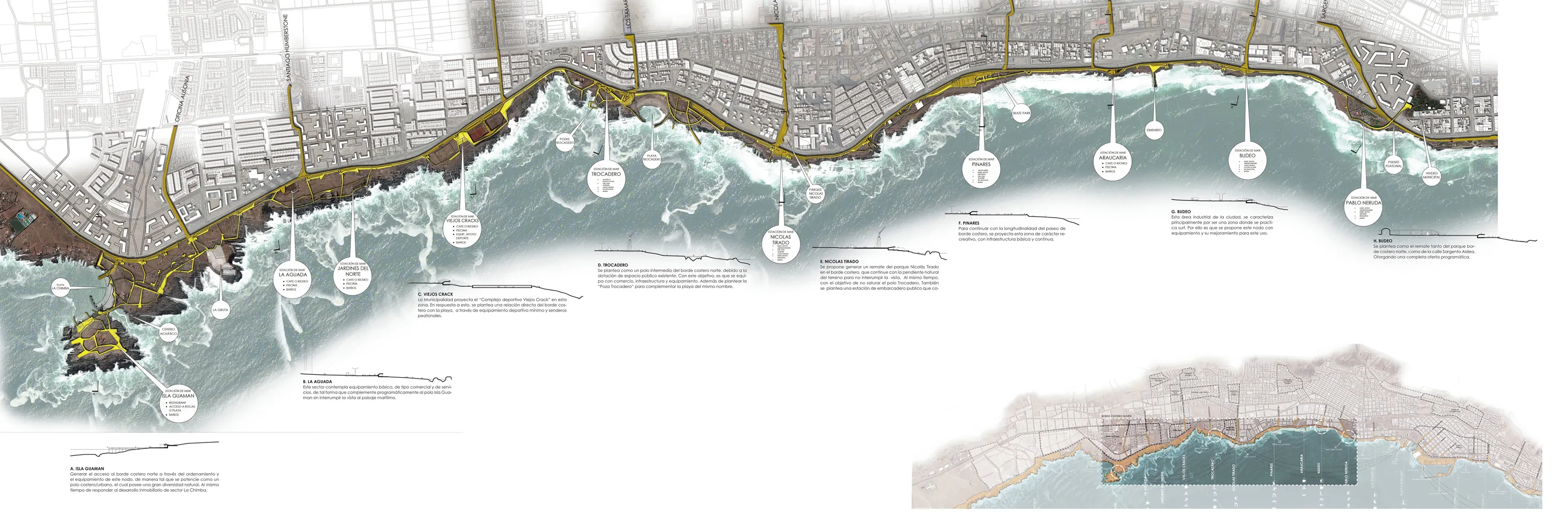
Master Plan that connects Antofagasta's urban fabric with its coastline through transversal links and a continuous coastal promenade.
- Category
- Urban Design
- Client
- Creo Antofagasta
- Associate office
- Prat Arquitectos
- Location
- Borde Costero de Antofagasta
- Region
- Antofagasta Region
- Area
- 32 Km lineales
- Project year
- 2017
- Status
- Project
- Award
- Honorable Mention
The city of Antofagasta unfolds between two extreme geographic systems: on one side, the monumental severity of the desert and its coastal hills; on the other, the tectonic forcefulness of the rocky sea edge. Within this narrow margin, the city has grown under tension, without yet managing to consolidate a harmonious and active relationship with its coastline. Our proposal for the Master Plan of the Antofagasta Coastal Edge Metropolitan Park (BCA) starts from an essential premise: to connect the urban fabric with the coastal territory through an urban operation that recognizes, amplifies and reinterprets the existing and potential links between city and sea.
Urban and Landscape Strategies
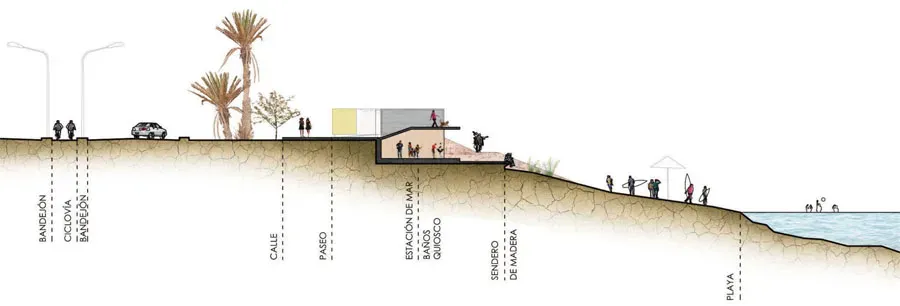
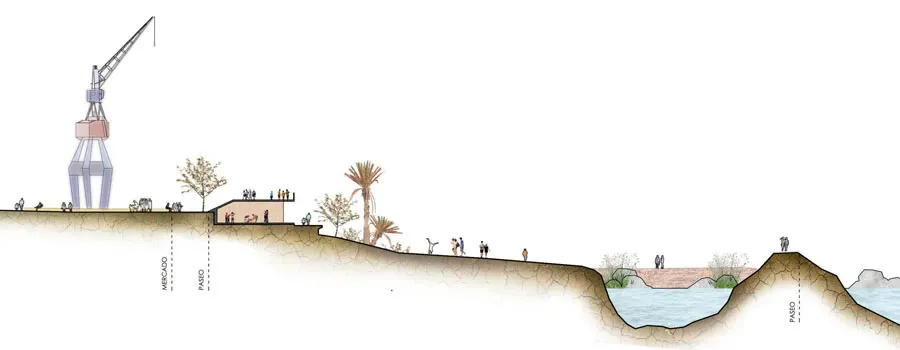
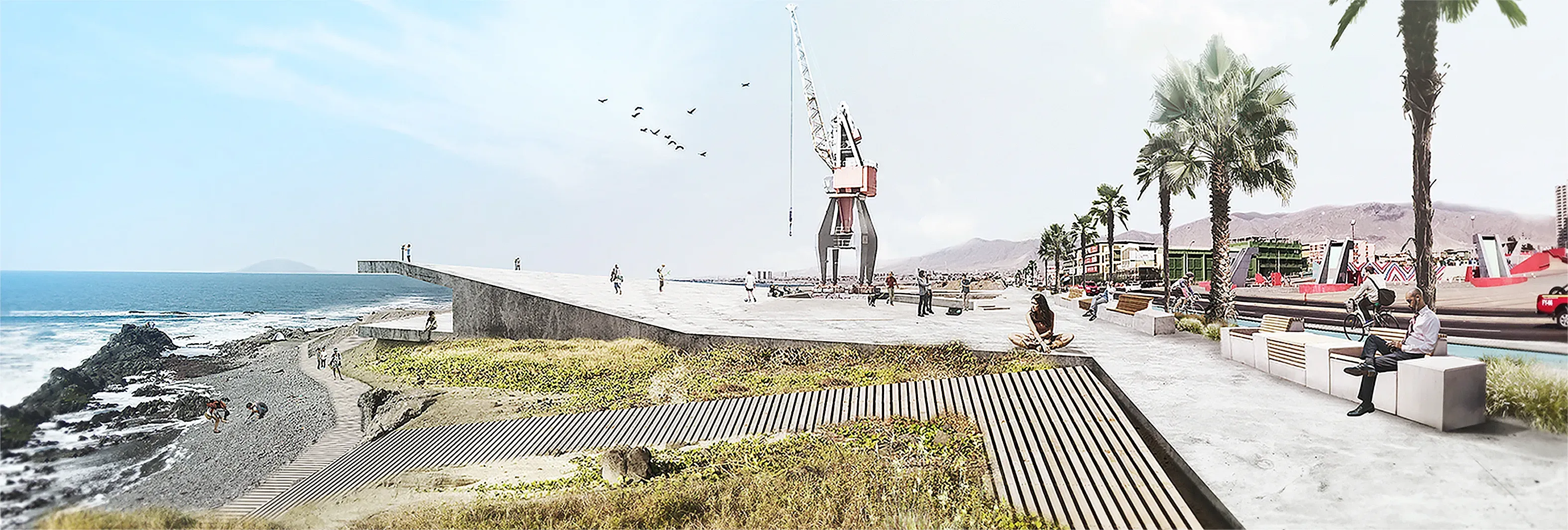
Transversal links: urban-coastal connectivity. The project structures a network of strategic transversal axes that connect the inner city with the coastal edge, breaking down the physical and perceptual barriers that have marginalized the sea as public space. These links are built from existing streets, historic axes, pedestrian passages and informal routes, giving them spatial continuity and functional hierarchy. They are designed as multifunctional landscape corridors, integrating pedestrian traffic, bike paths, native vegetation and urban amenities.
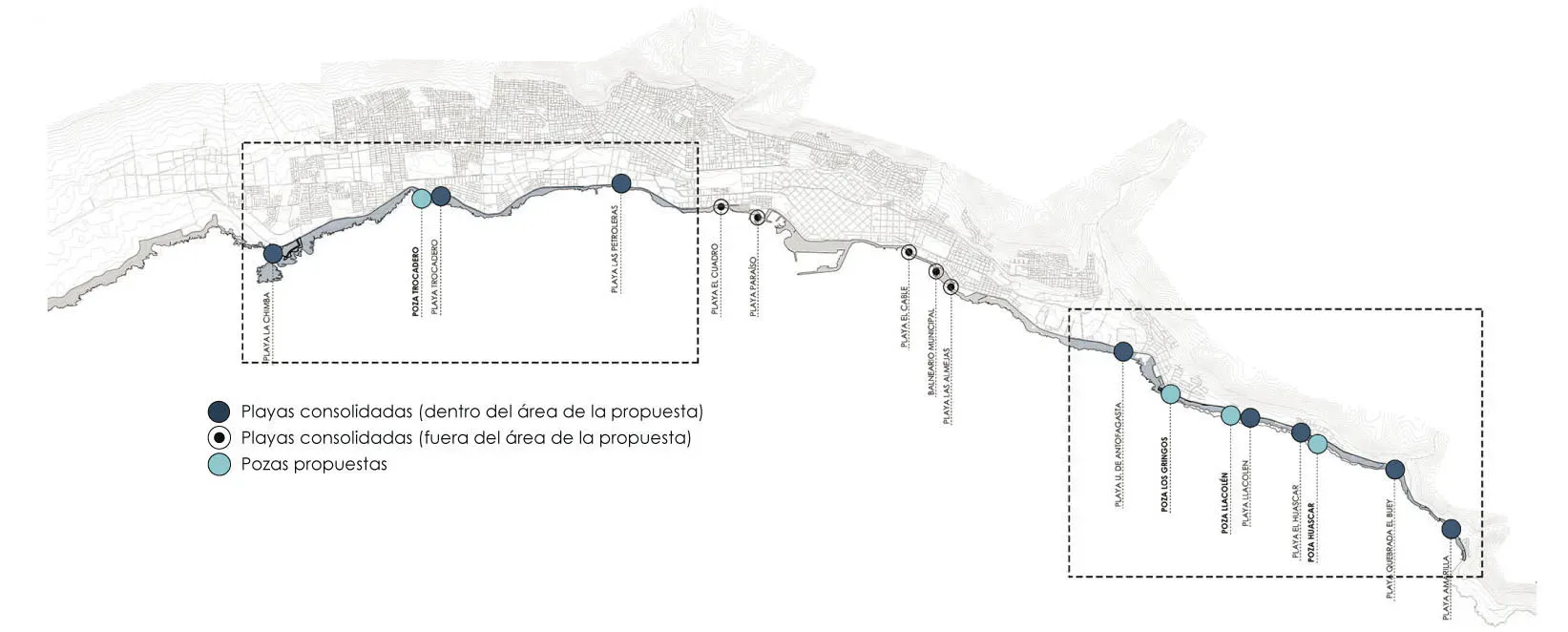
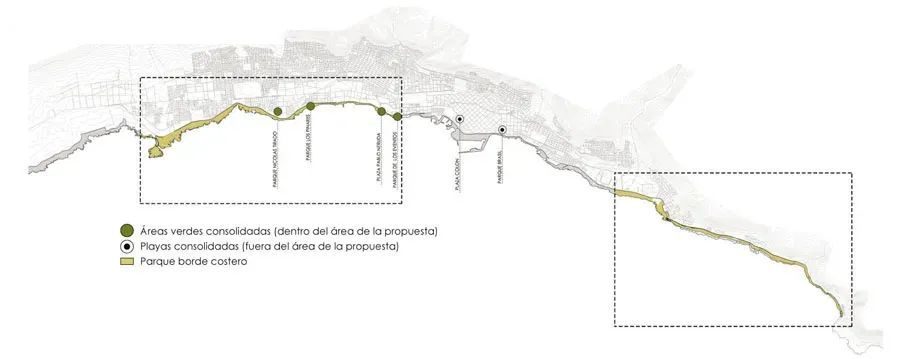
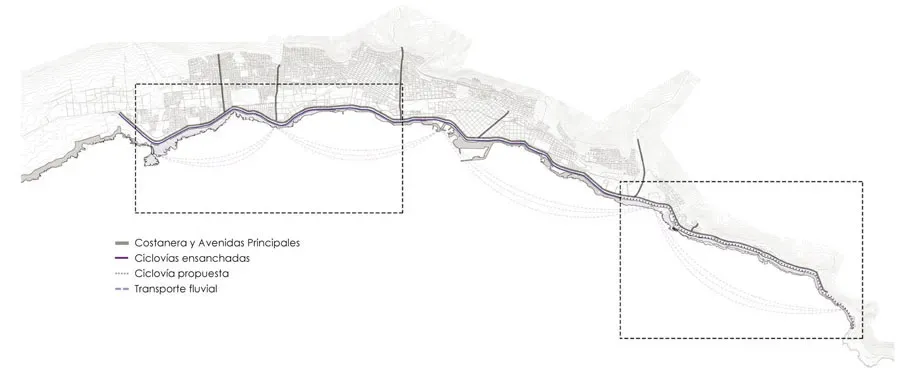
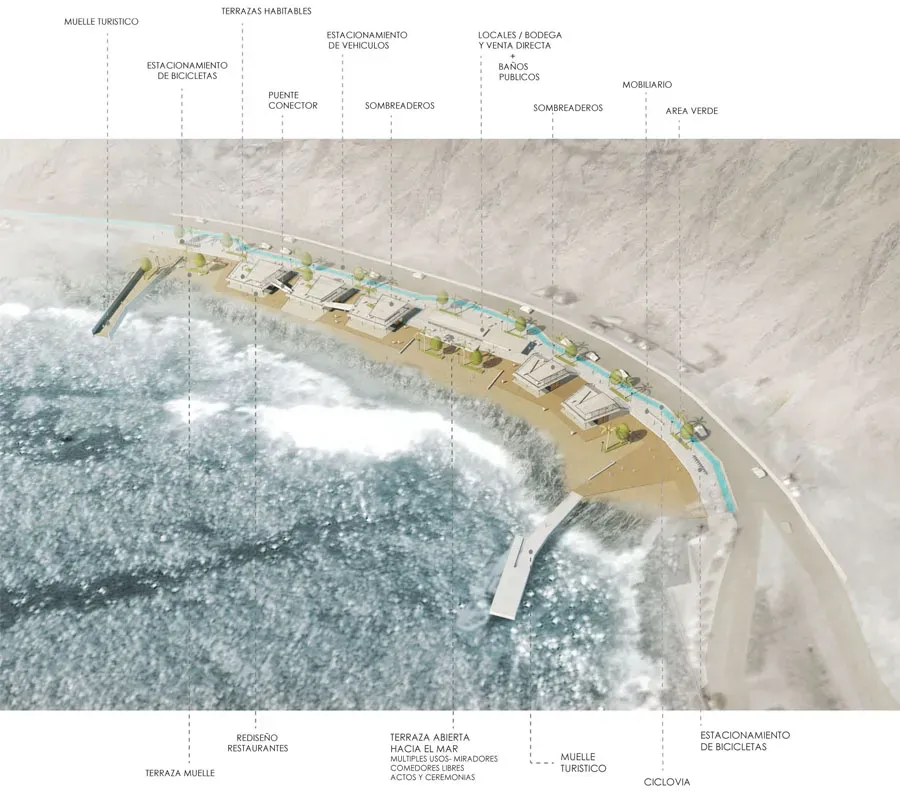
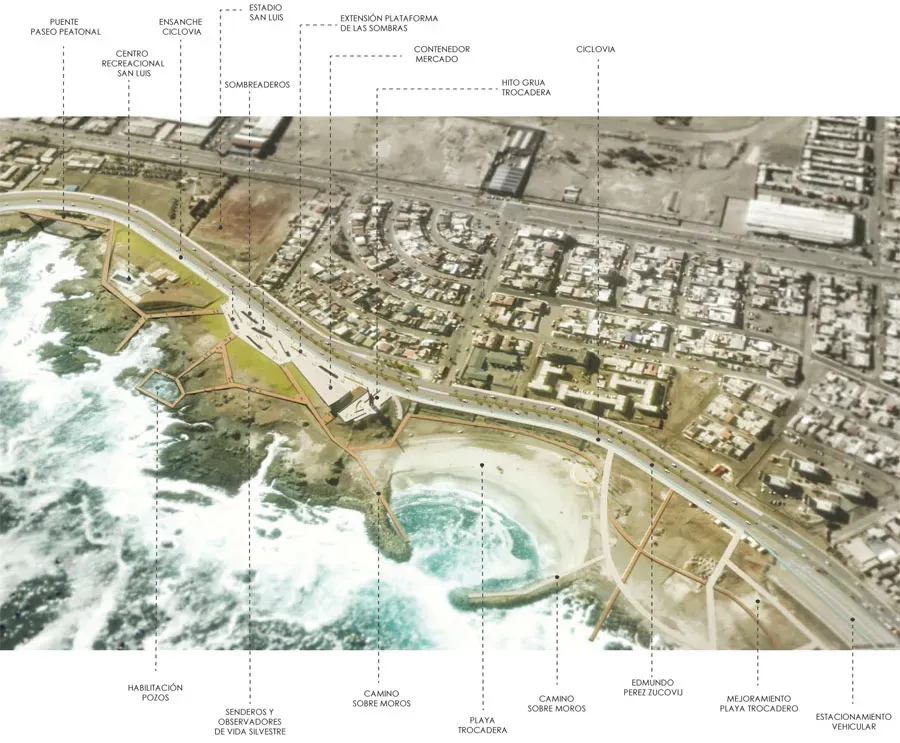
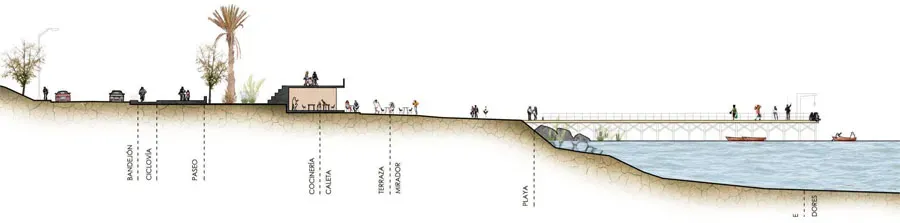
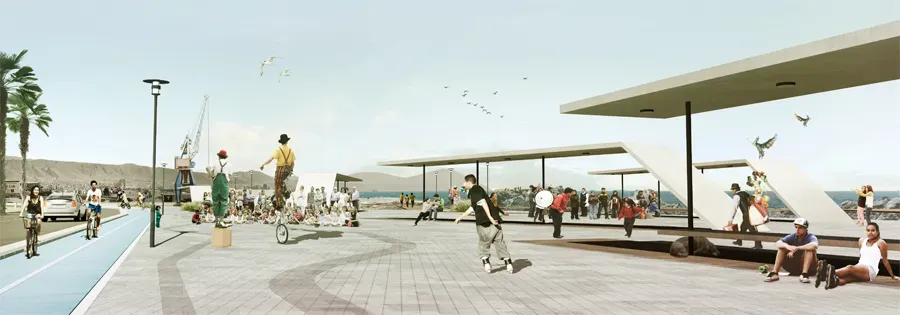
Pedestrian continuity and rhythms of appropriation. Pedestrian continuity is proposed as a structuring line of the project, running along the edge as a seafront promenade of metropolitan character, connecting currently fragmented sectors. This line is neither uniform nor homogeneous: it adapts to the conditions of the terrain and adjacent uses, proposing varied rhythms of appropriation, from contemplative stretches to spaces of high urban intensity. Shade design strategies, durable street furniture, lookout points, rest areas and programmatic nodes that densify activity at key points are incorporated.
New Programmatic Uses and Spaces for Social Integration
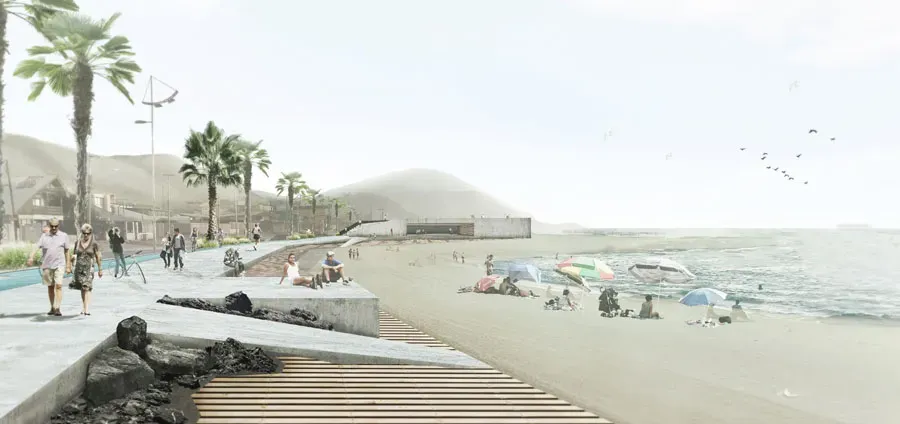
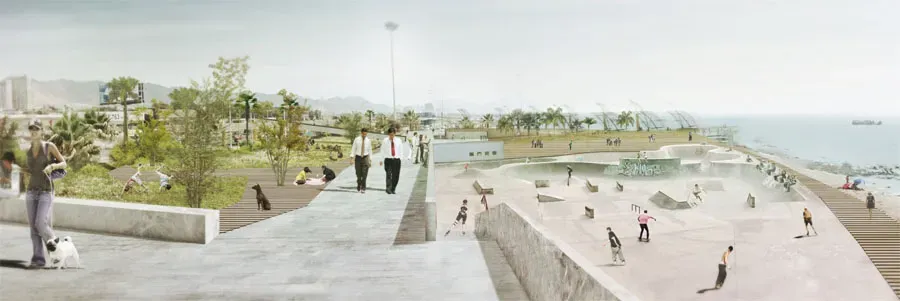
The coastal edge ceases to be merely a facade and becomes an active system, where new programmatic uses emerge in dialogue with the communities and their diversity. Sports facilities, open cultural spaces, seafood markets, intergenerational gathering areas and environmental observation points are planned. These uses are strategically distributed, generating a heterogeneous, inclusive system of social integration, with universal accessibility and varied scales of intervention ranging from the neighborhood to the metropolitan level.
Materiality and Coastal Resilience
Considering the demanding saline and climatic conditions of Antofagasta’s coastline, the proposal is grounded in an enduring materiality, based on treated concrete, galvanized steel, stabilized wood and local mineral cladding. This selection responds both to durability criteria and to an austere, robust aesthetic in keeping with the desert-marine landscape. The proposed vegetation is native or adapted, low in water consumption, with ecological and climate-comfort functions.
A Park as a Geo-Urban Interface
The Metropolitan Park is not understood as an isolated piece nor as a simple “green filler,” but as an ecological and cultural infrastructure that reinterprets the edge as an interface between city and geography. Its logic is not linear but systemic: it weaves together memories, urban fabrics and coastal ecologies; connects urban patterns with natural processes; and positions itself as a space for environmental education, recreation, resilience and identity-building.