International Competition: Ruinas de Huanchaca Master Plan
Parque Cultural Ruinas de Huanchaca, Antofagasta Region · 2014 · Public Space · Competition
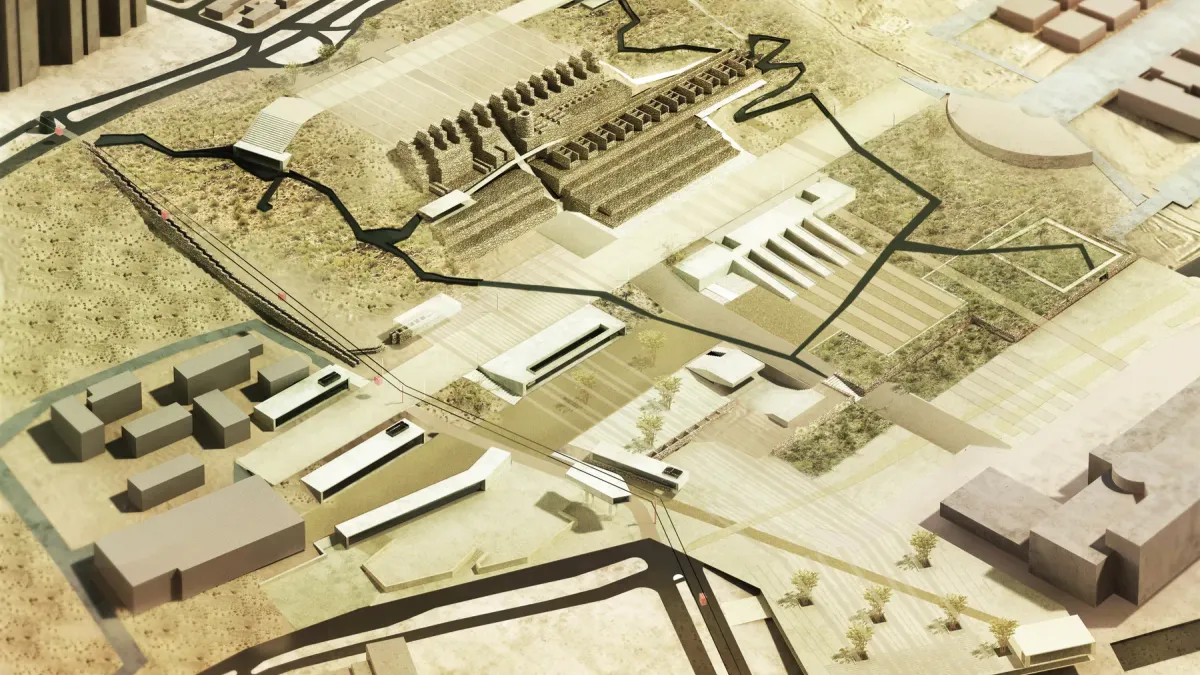
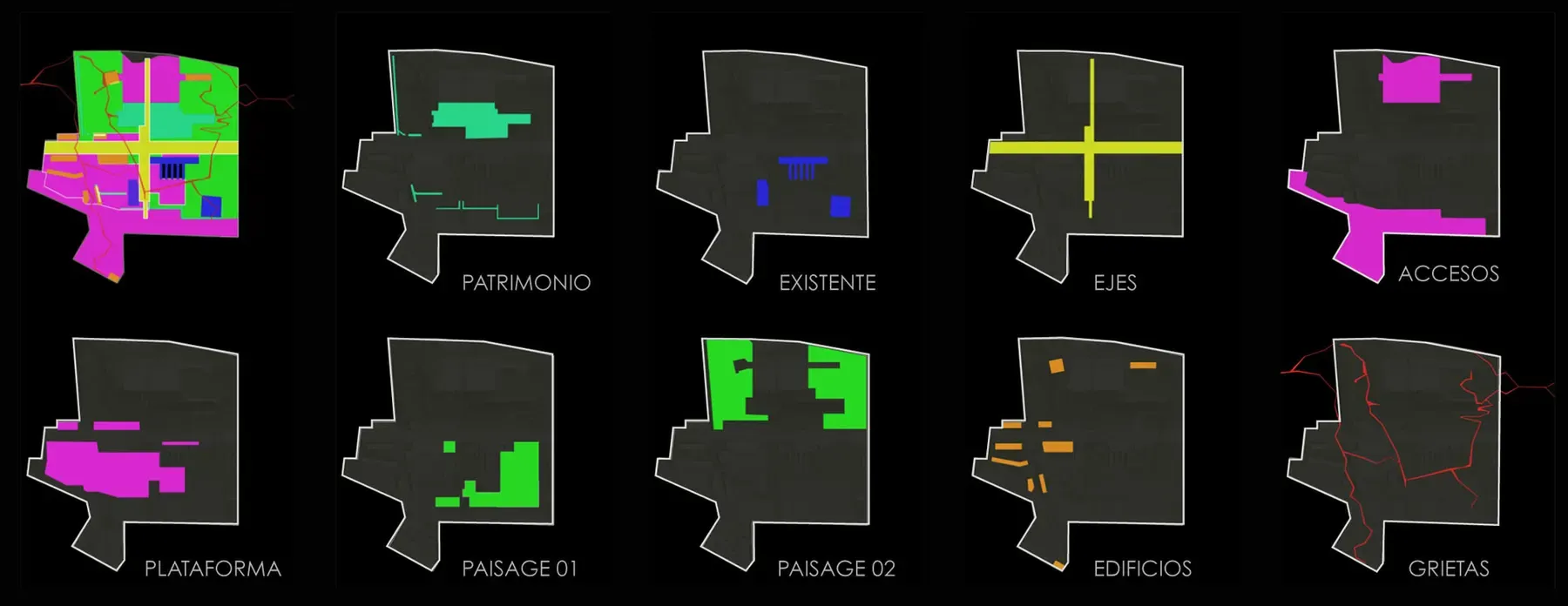
Master plan that integrates the Ruinas de Huanchaca as the symbolic core of a cultural park, structured by a fissure that evokes the desert and mineral landscape of northern Chile.
- Category
- Public Space
- Client
- Ruinas de Huanchaca Foundation
- Collaborators
- Diego Portales, Ximena Nazal
- Location
- Parque Cultural Ruinas de Huanchaca, Antofagasta Region
- Region
- Antofagasta Region
- Area
- 4,4 Há
- Project year
- 2014
- Status
- Competition
The Fissure: Evocation, Desert and Mineral Symbol
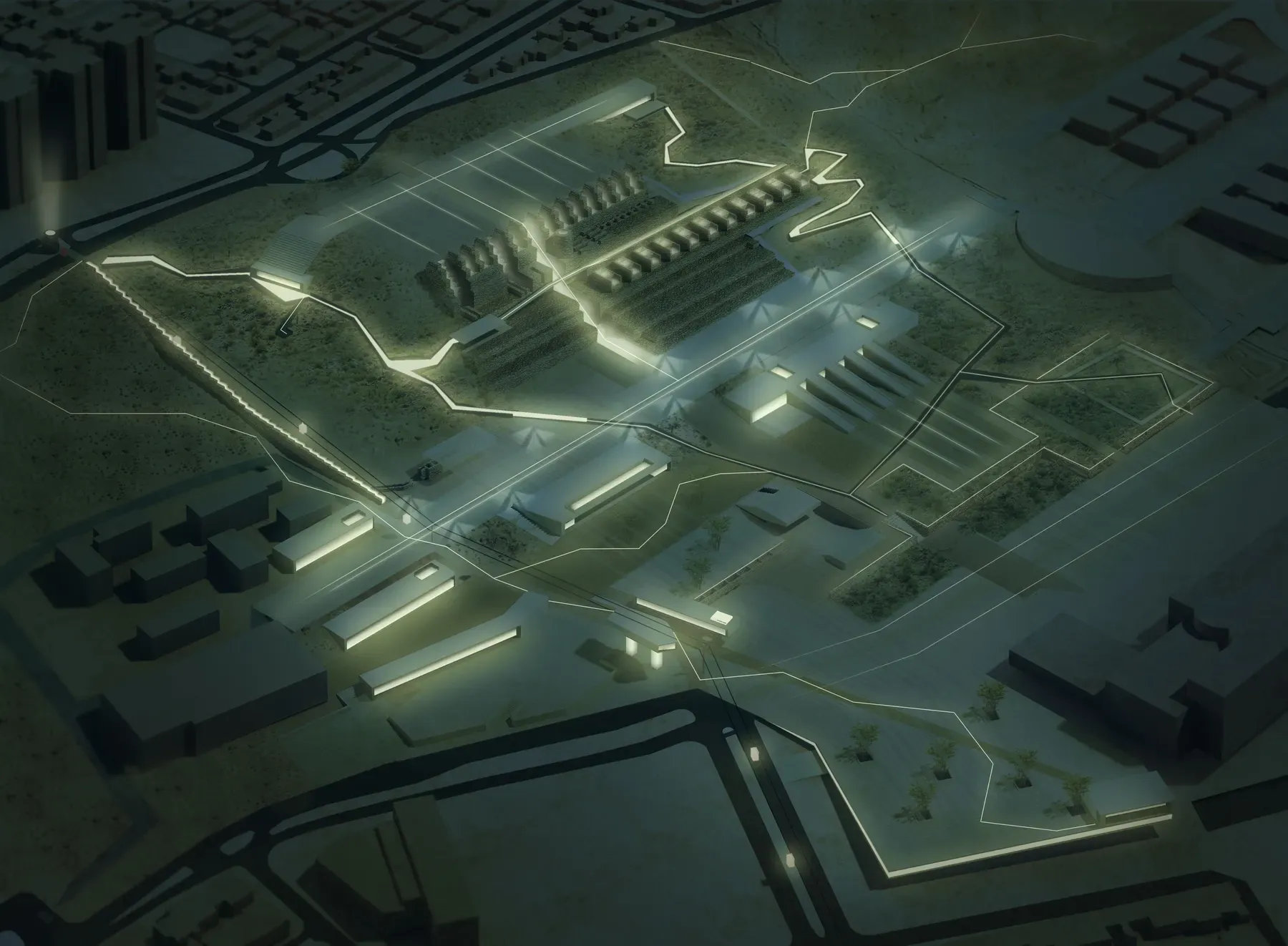
The fissure is conceived as an urban gesture that emerges organically from the surface of the terrain, evoking the natural cracks of the desert landscape and the mineral texture characteristic of northern Chile. It is not an imposed element, but a trace that seems to predate the project, connecting past and present. Its sinuous, irregular path articulates the space, functioning as an integrating axis that links functional areas and diverse programs, from open public spaces to cultural or contemplative zones.
This fissure guides the user’s movement through the site, generating shifting spatial sequences, unexpected perspectives, and points of encounter. Its irregular shape recalls the unpredictable character of the desert territory, inviting visitors to experience the space as a living, dynamic geography.
Archaeological, Industrial, and Railway Identity
The project recognizes essential historical and symbolic value in the area’s industrial and railway heritage—particularly in the Ruinas de Huanchaca. These ruins, witnesses to the era of mining and railway boom, represent collective memory, resilience, and urban transformation. By integrating them as the heart of the master plan, the project not only protects their condition as a vestige but also turns them into a catalyst for new cultural and social dynamics. The project’s materials and formal language draw inspiration from industrial architecture: metal structures, oxidized textures, stone, and exposed concrete engage in dialogue with the past without imitating it, generating continuity between the historical and the contemporary.
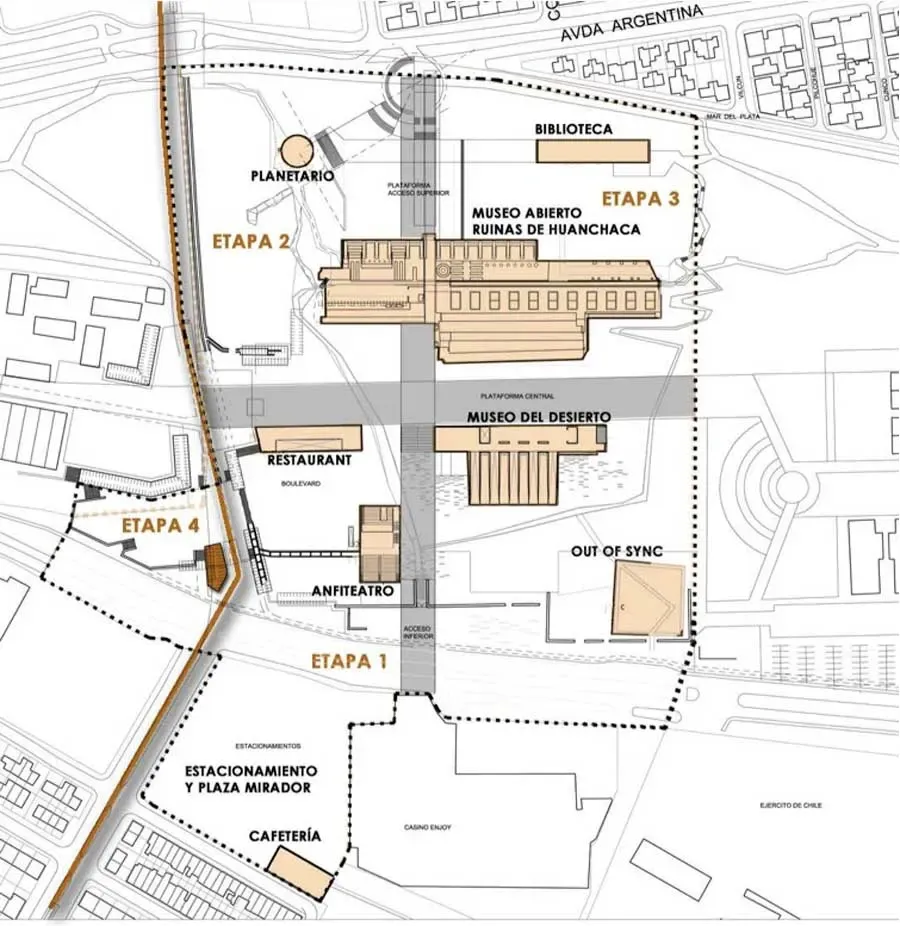
The railway evocation is translated into linear routes and spatial rhythms that recall the old train tracks, suggesting movement and connection. This industrial identity not only pays homage to the mining and railway legacy but also reinforces the narrative of the territory’s resilience, showing how traces of the past can become opportunities for urban and landscape regeneration.
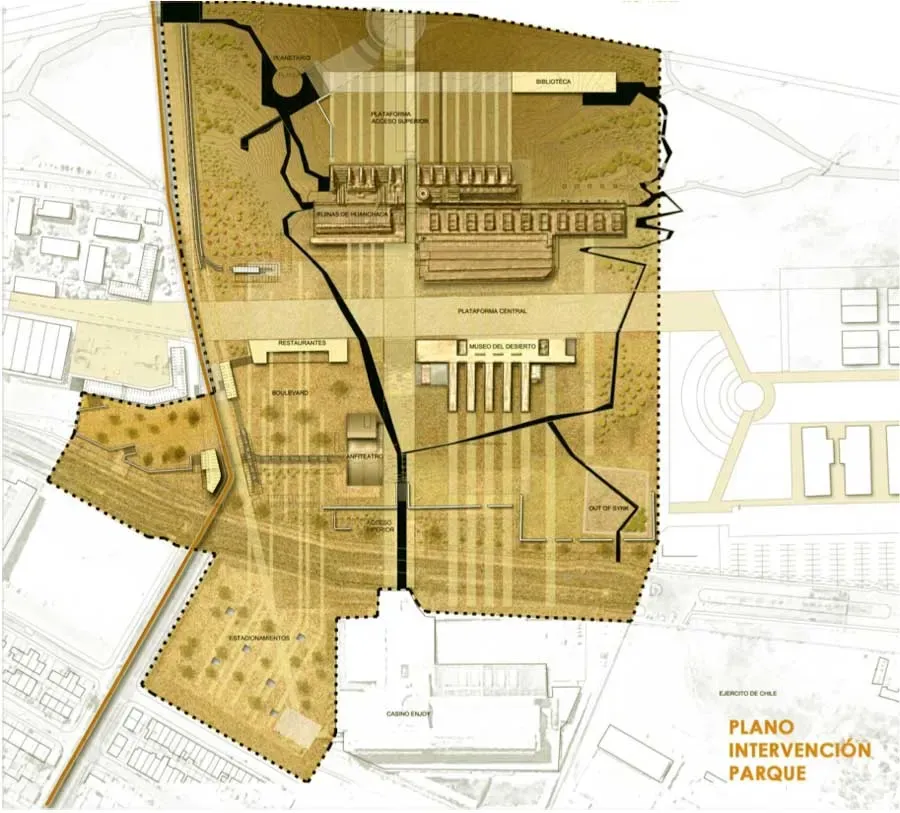
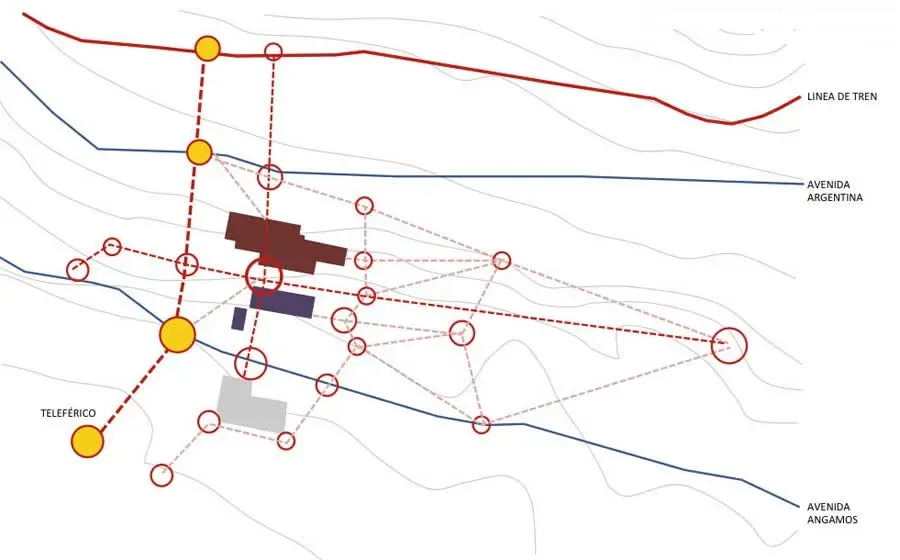
By articulating the fissure as a guiding element and the ruins as a symbolic core, the project interweaves origin and future, creating a public space that honors its history and projects a new identity for the community.