Guidelines for Sustainable Mobility, Lo Barnechea Commune
Comuna de Lo Barnechea, Metropolitan Region · 2016 · Urban Design · Project
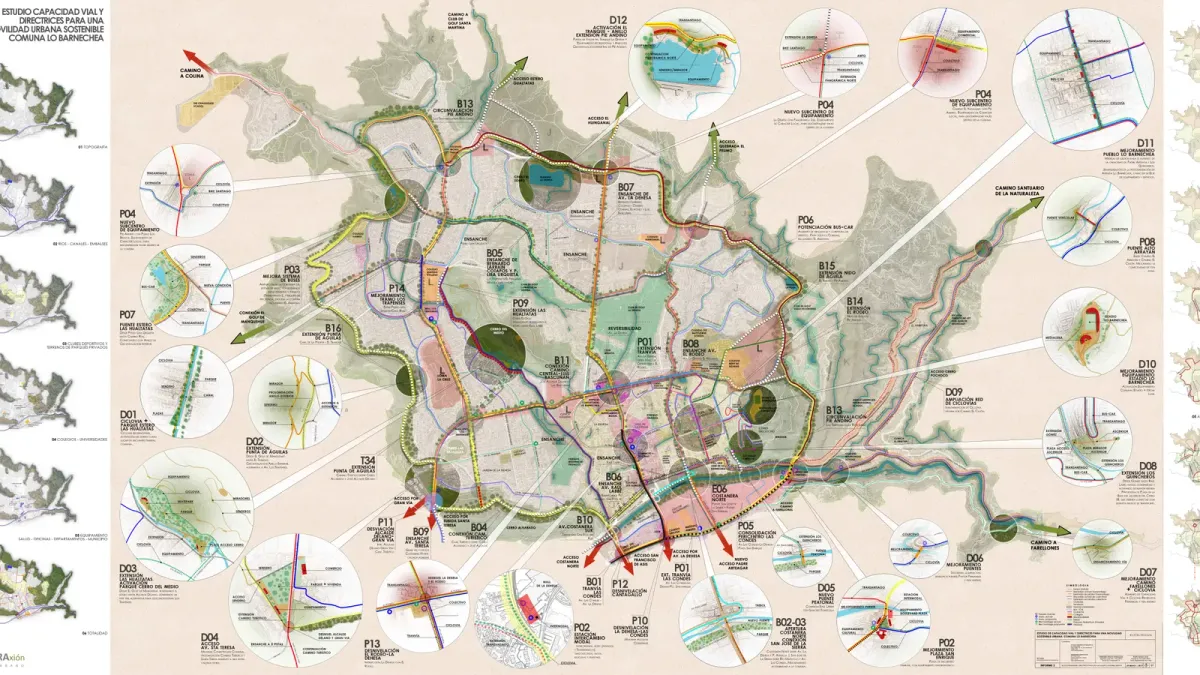
Road capacity study and sustainable mobility guidelines for Lo Barnechea, as part of the update to its municipal zoning plan.
- Category
- Urban Design
- Client
- Municipality of Lo Barnechea
- Associate office
- CIS Asociación de Consultores en Transporte
- Collaborators
- Diego Portales, Joaquín García, Luis Sáez, Daniel González
- Location
- Comuna de Lo Barnechea, Metropolitan Region
- Region
- Metropolitan Region
- Area
- 4.500 Há
- Project year
- 2016
- Status
- Project
The study updates road capacity and defines sustainable mobility guidelines for the commune, within the framework of the new Lo Barnechea Municipal Zoning Plan (Plan Regulador Comunal), incorporating the 2012-2021 Regional Development Strategy and the National Urban Development Policy (2014) to ensure coherence with public policy and national urban development.
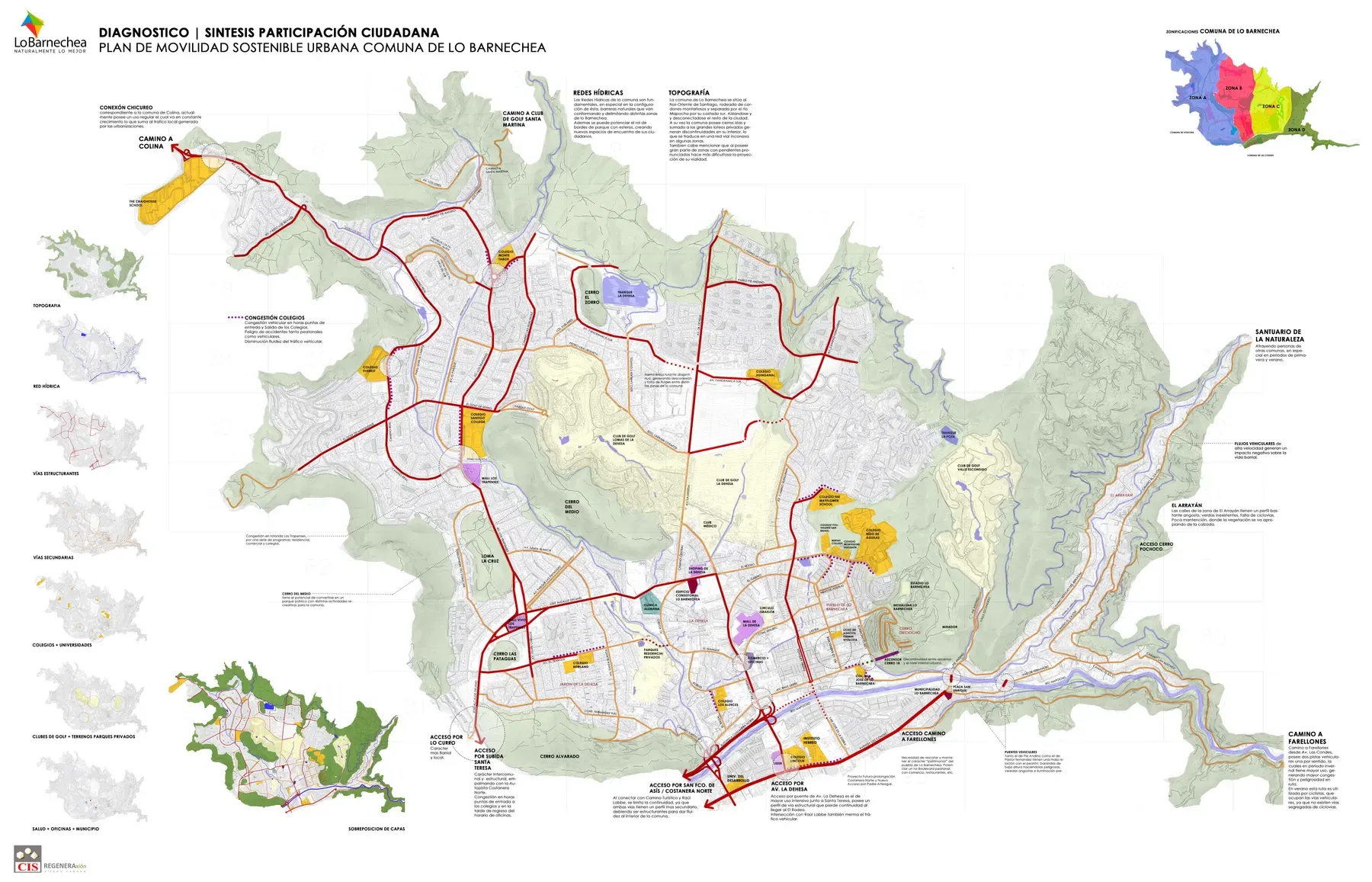
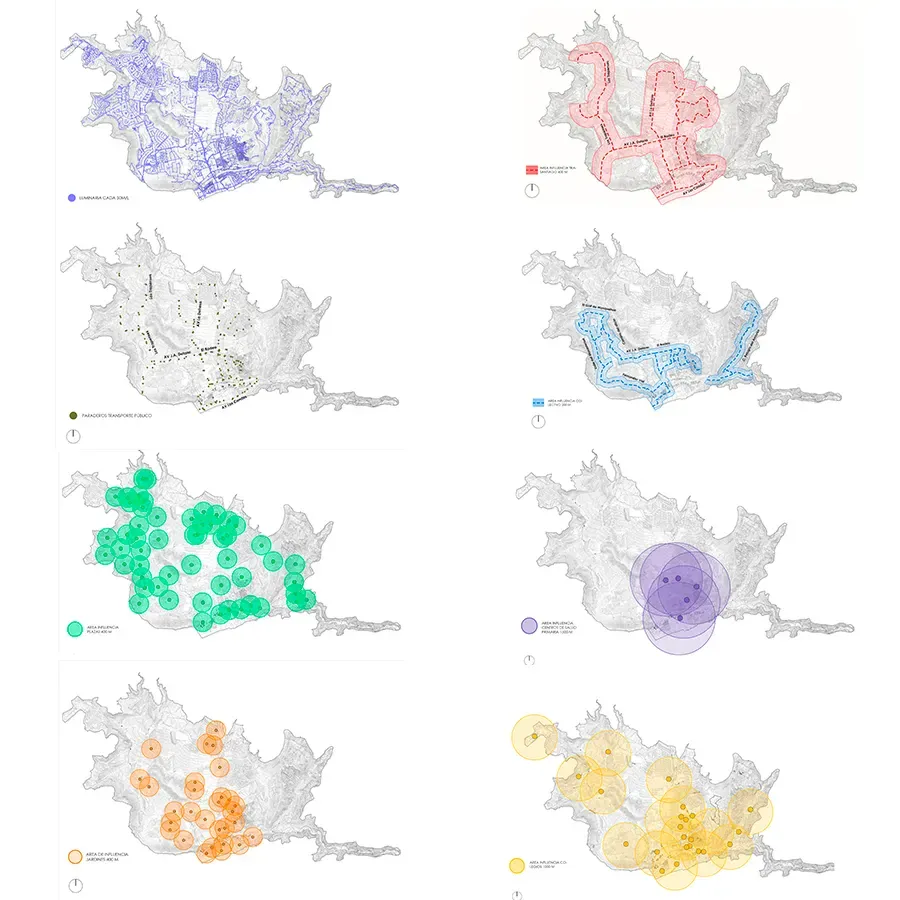
Specific objectives
- Update road capacity considering OGUC/LGUC regulations and the incorporation of the Centro Cordillera territory (PRMS).
- Assess transportation scenarios as alternatives to the private automobile.
- Establish guidelines to optimize infrastructure and guide the update of the PRCLB toward sustainable mobility.
- Propose traffic management projects based on the analysis of conflicts, and current and projected transport supply and demand.
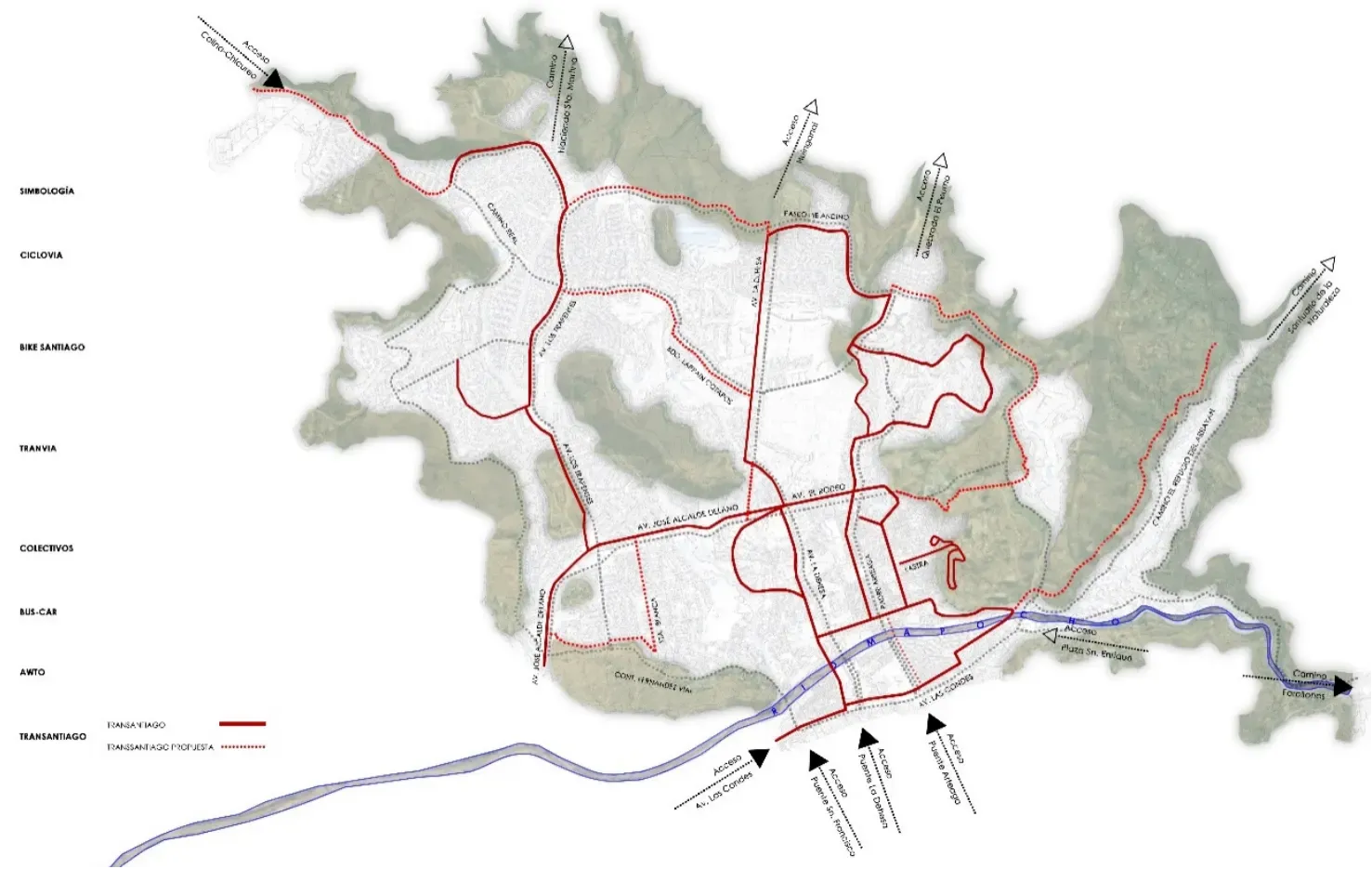
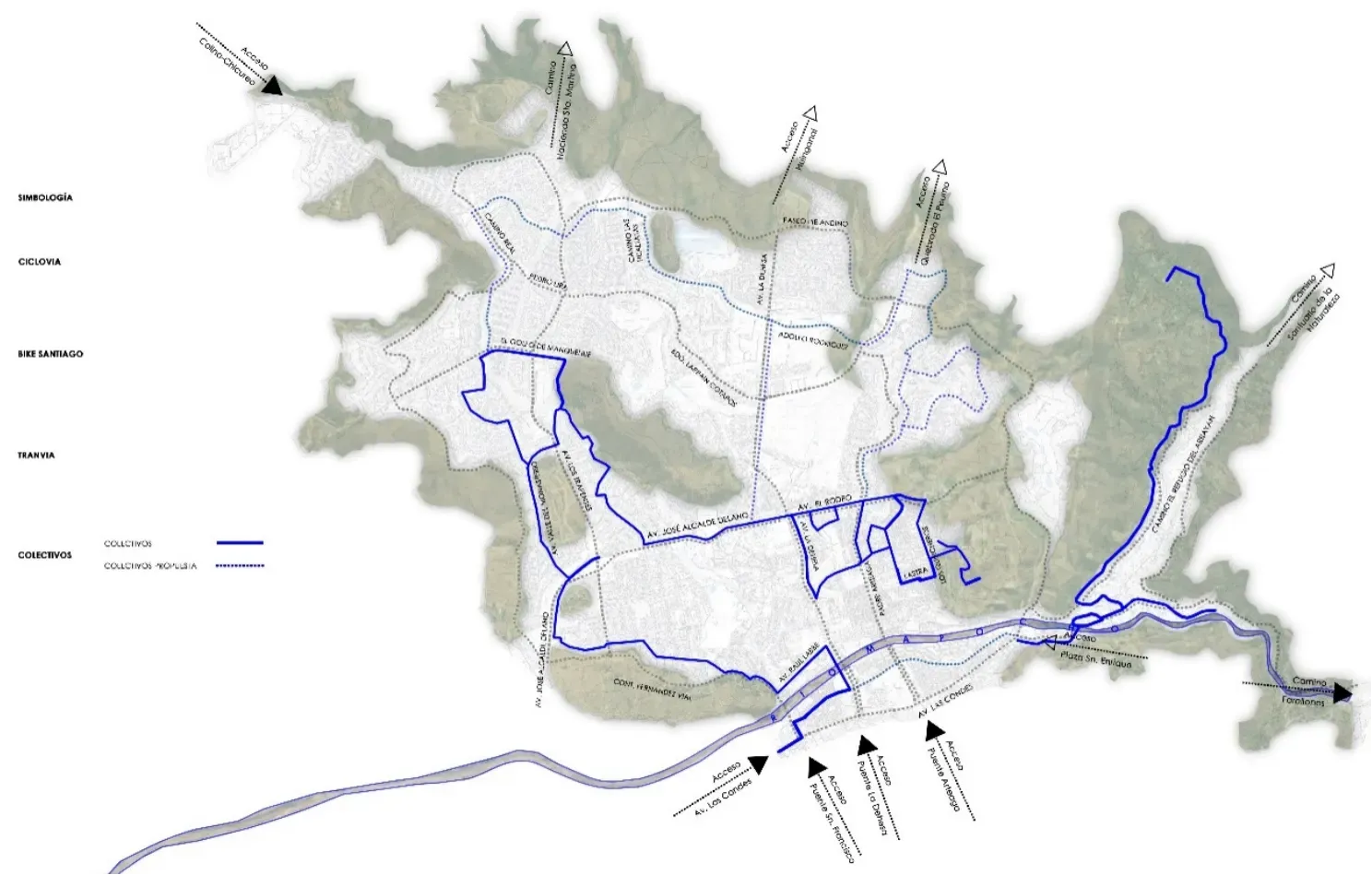
Conclusions
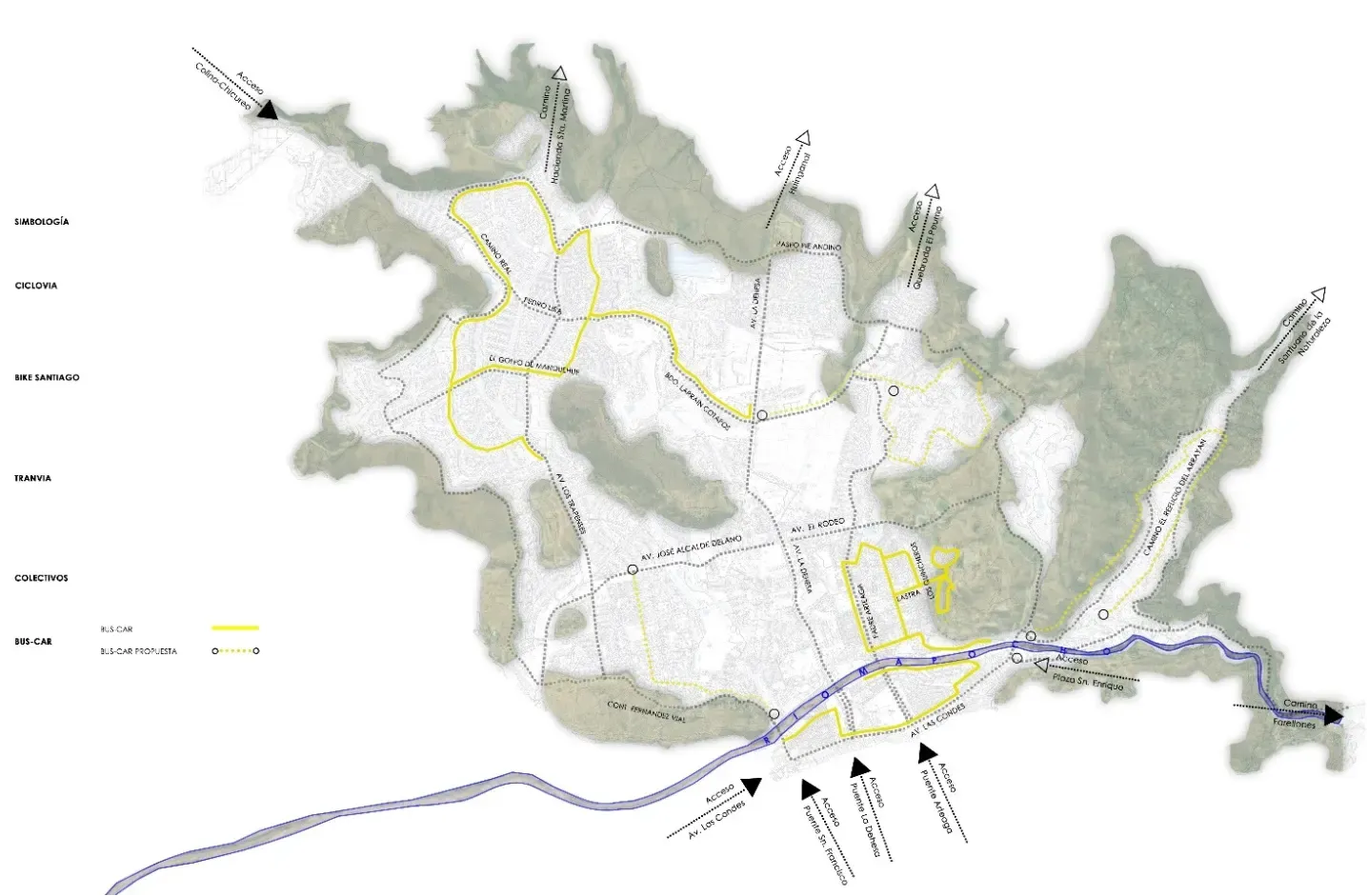
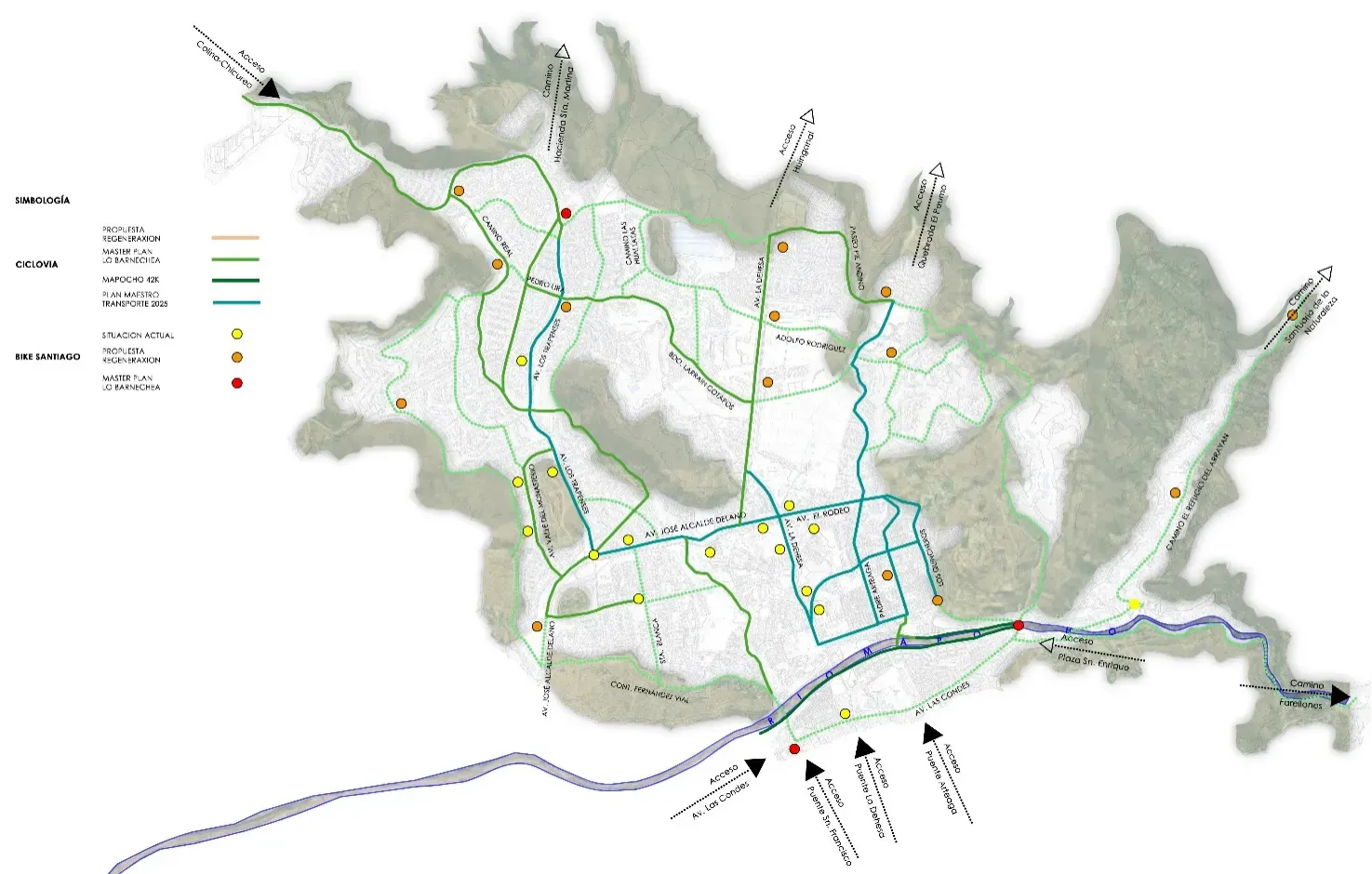
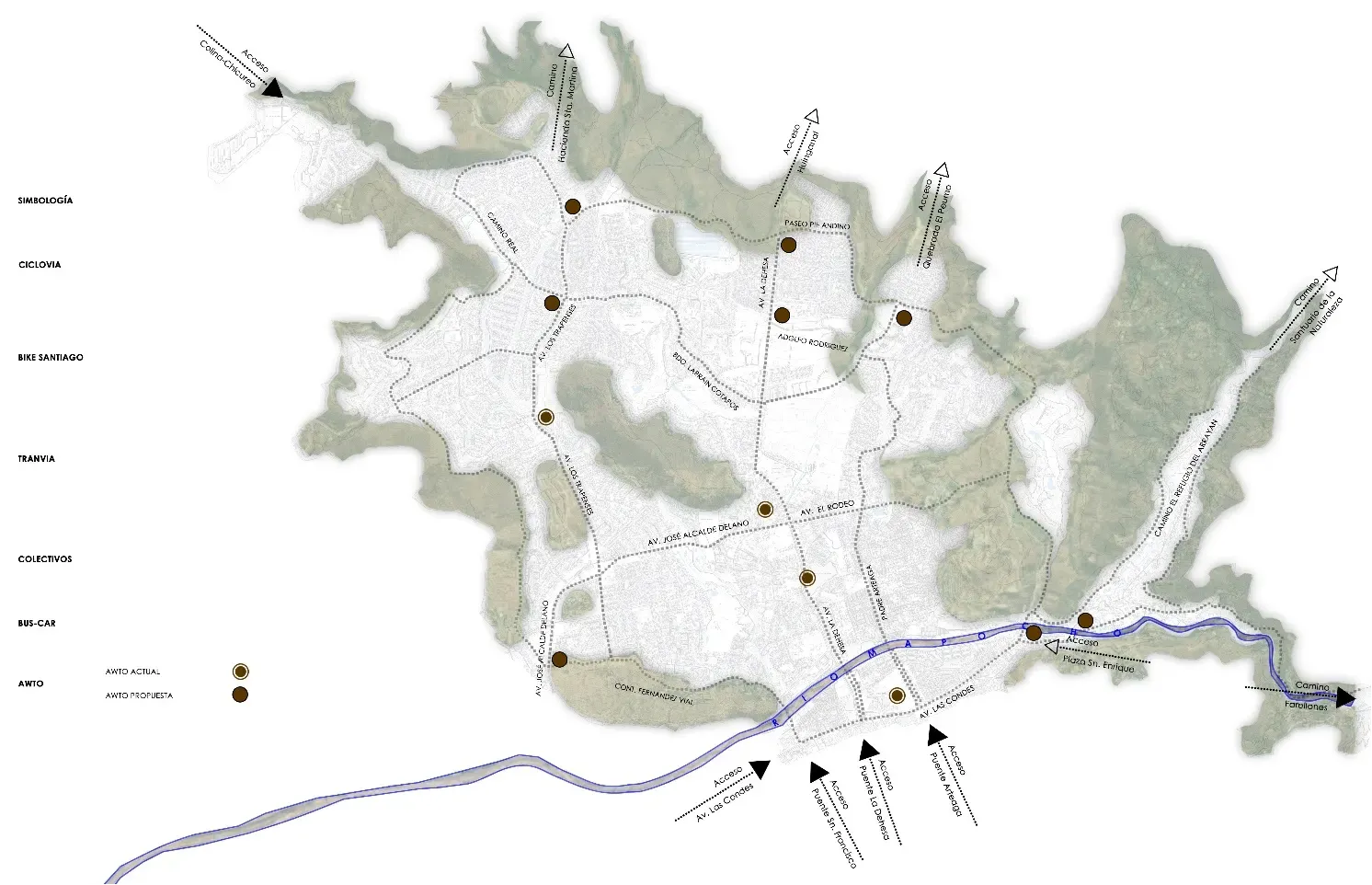
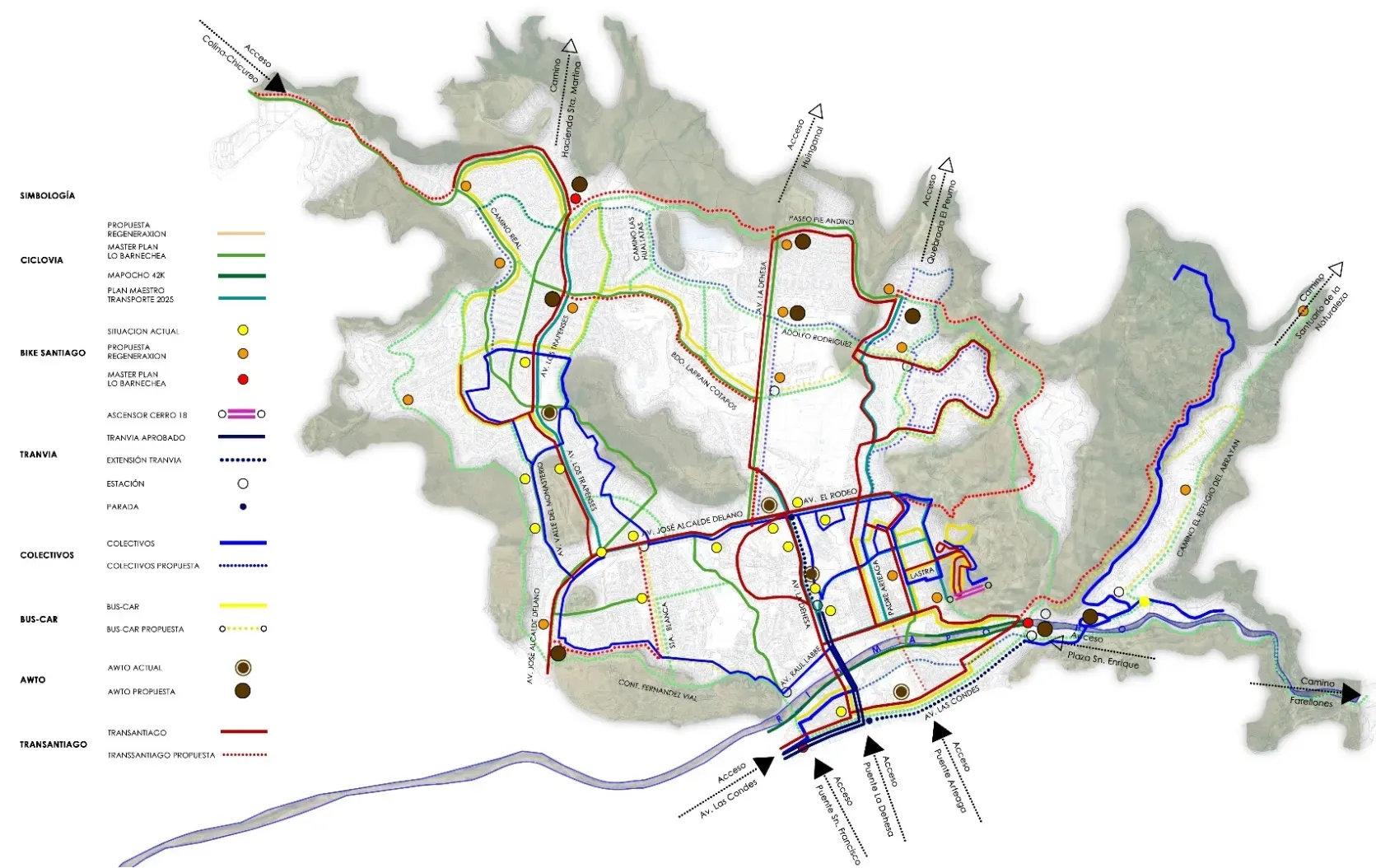
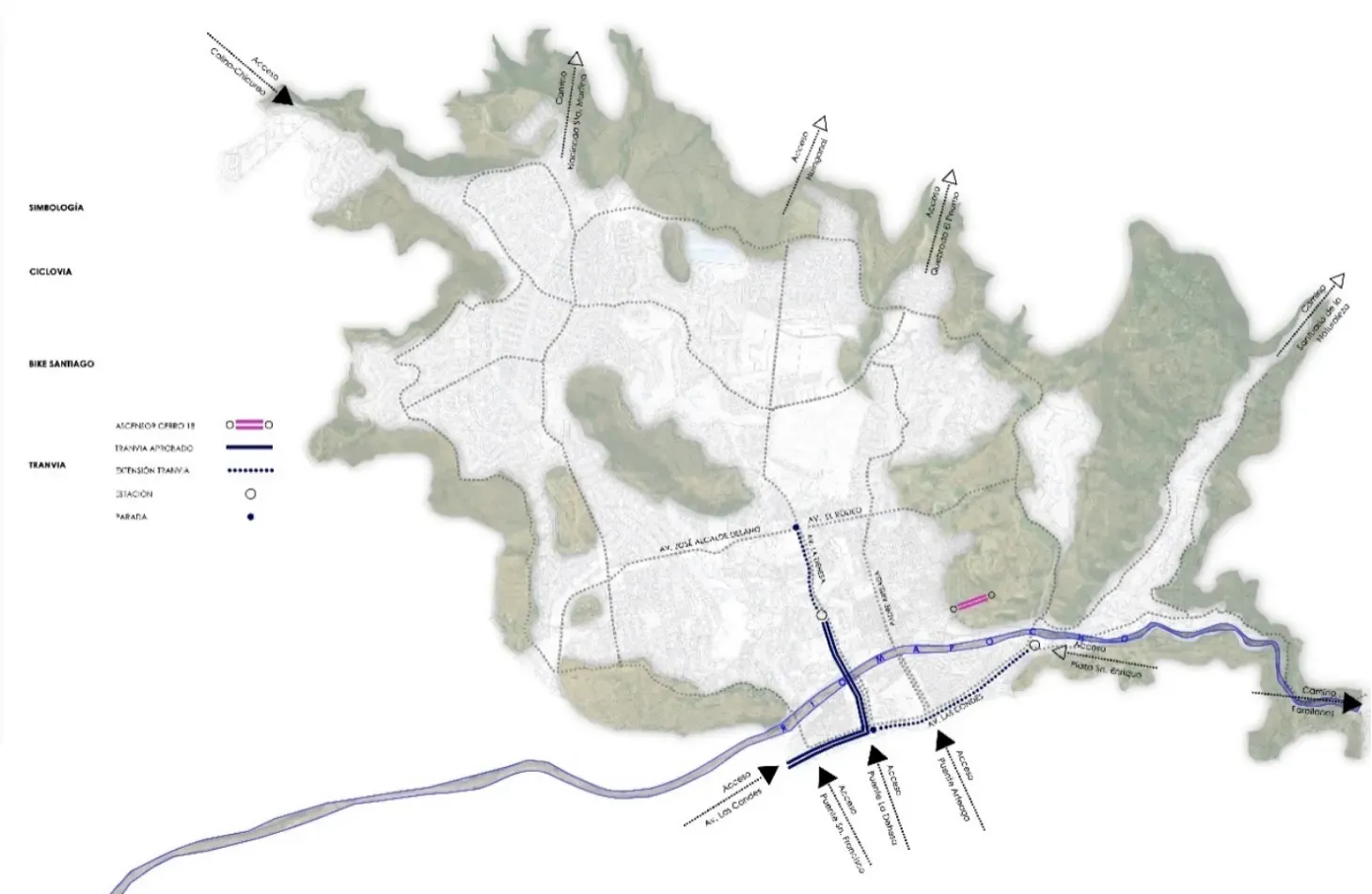
The urban road structure, its interaction with different modes of transport, and the generation of catalytic public space projects produce a network with greater degrees of integration at different levels. The commune’s two major problems lie in the excessive use of the private automobile —driven by the commune’s road and natural structure, with long distances and routes— and in its location relative to the city of Santiago, which makes it an isolated commune, albeit one with a lush natural environment.
For this reason, seeking new modes of sustainable transport that are connected and coordinated with one another is essential. At the same time, catalytic public space projects must incorporate parameters of integration, social encounter, and improved quality of life for residents, seeking to bridge neighborhood fragmentation and the disconnection between different areas of the commune, serving as a national example of a holistic vision.